
gANDY COFFEE HOUSE
The Historic Captain J. F. Alston House
Gandy Coffee House is located inside the historic Captain J. F. Alston House, a late 19th-century Queen Anne Victorian Home and a contributing property in the National Register of Historic Places within Pittsboro’s Historic District.
A National Registry Historic Building
-
See a list of the town’s historic properties in the National Park Service registration
-
According to the National Park Service nomination, The Captain J.F. Alston House is listed as a contributing building
“14 N. Small Street, ca 1892
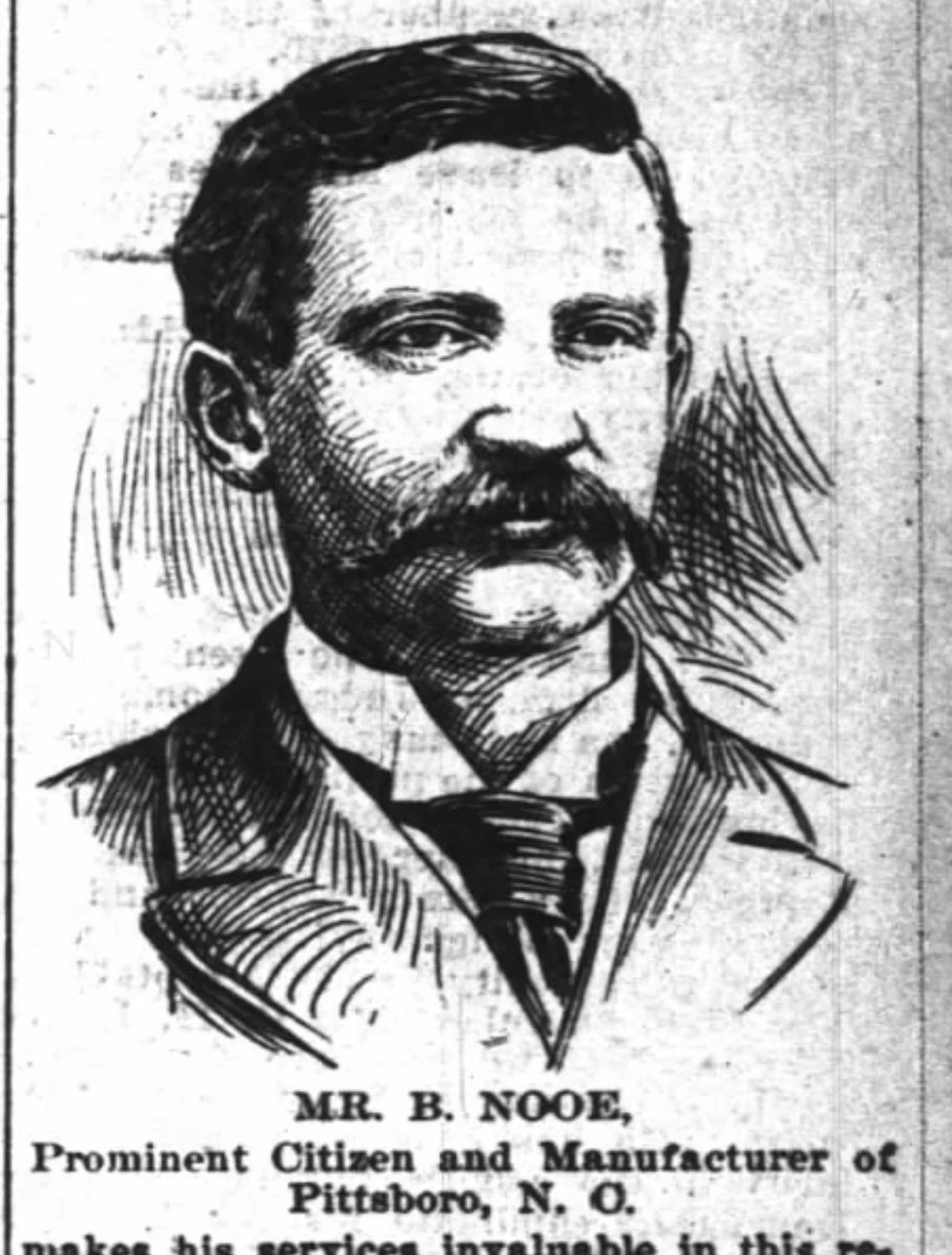
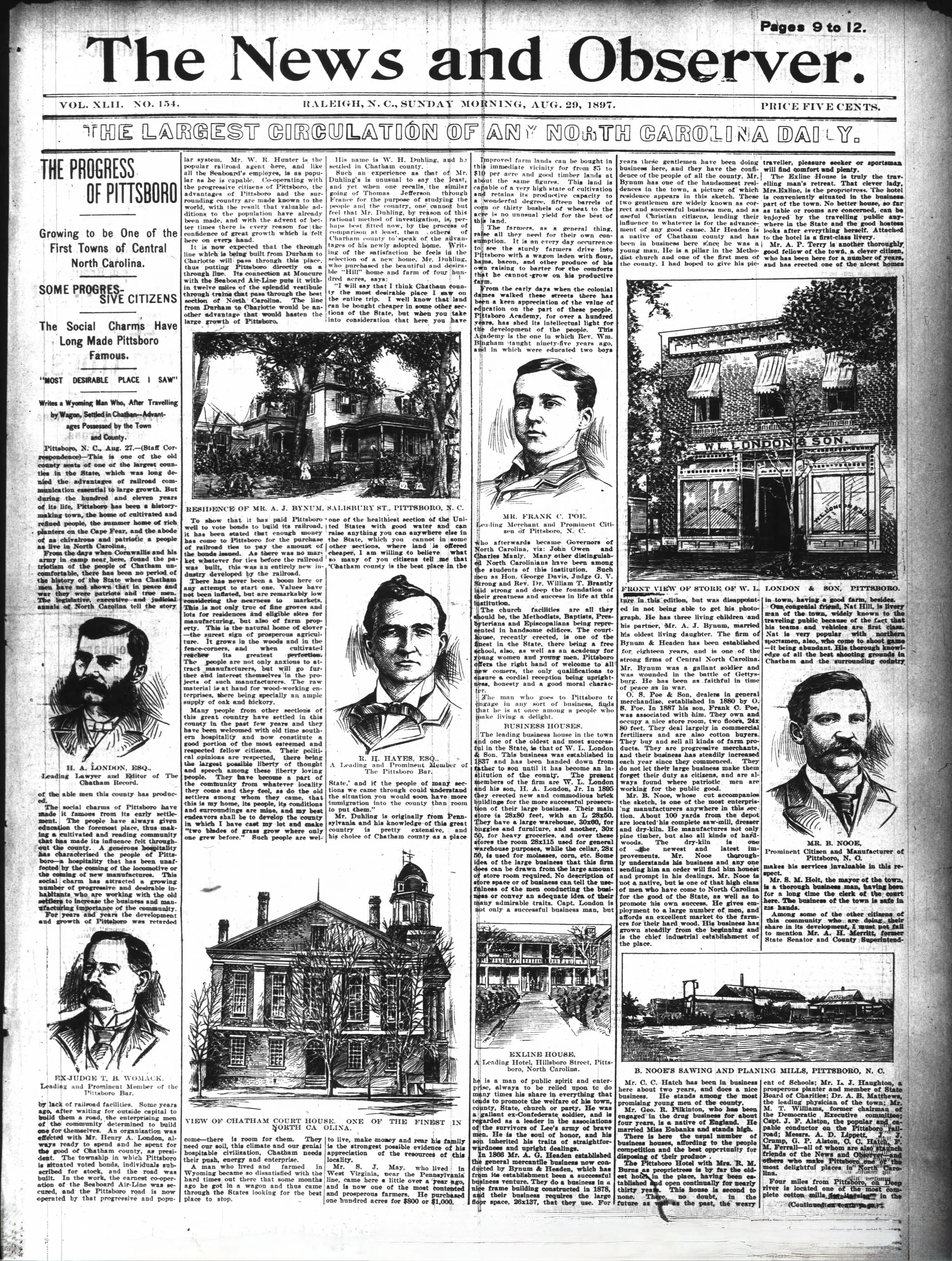
The frame, two-story, tri-gable house with wrap around porch features two-over-two sash windows, and an interior brick chimney with corbeled cap. A number of one-story shed and gable-roof additions appear at the rear. Alterations include vinyl siding, replacement porch posts, and missing porch railing. W. L. London, a principal stockholder of the Pittsboro Railroad Company, had this house built sometime after 1886. In 1892, J.F. Alston purchased the house and lot from London for $550. Alston may have hired contractor Bennet Nooe to add the porch about 1892, as it resembled his porches on other houses prior to remodeling. Alston was a locomotive engineer in the early 20th century. The house originally stood in the middle of East Street and was moved to its present site facing Small Street in the 1950s when U.S. 64 was created. (Osbomand Selden-Sturgill) “
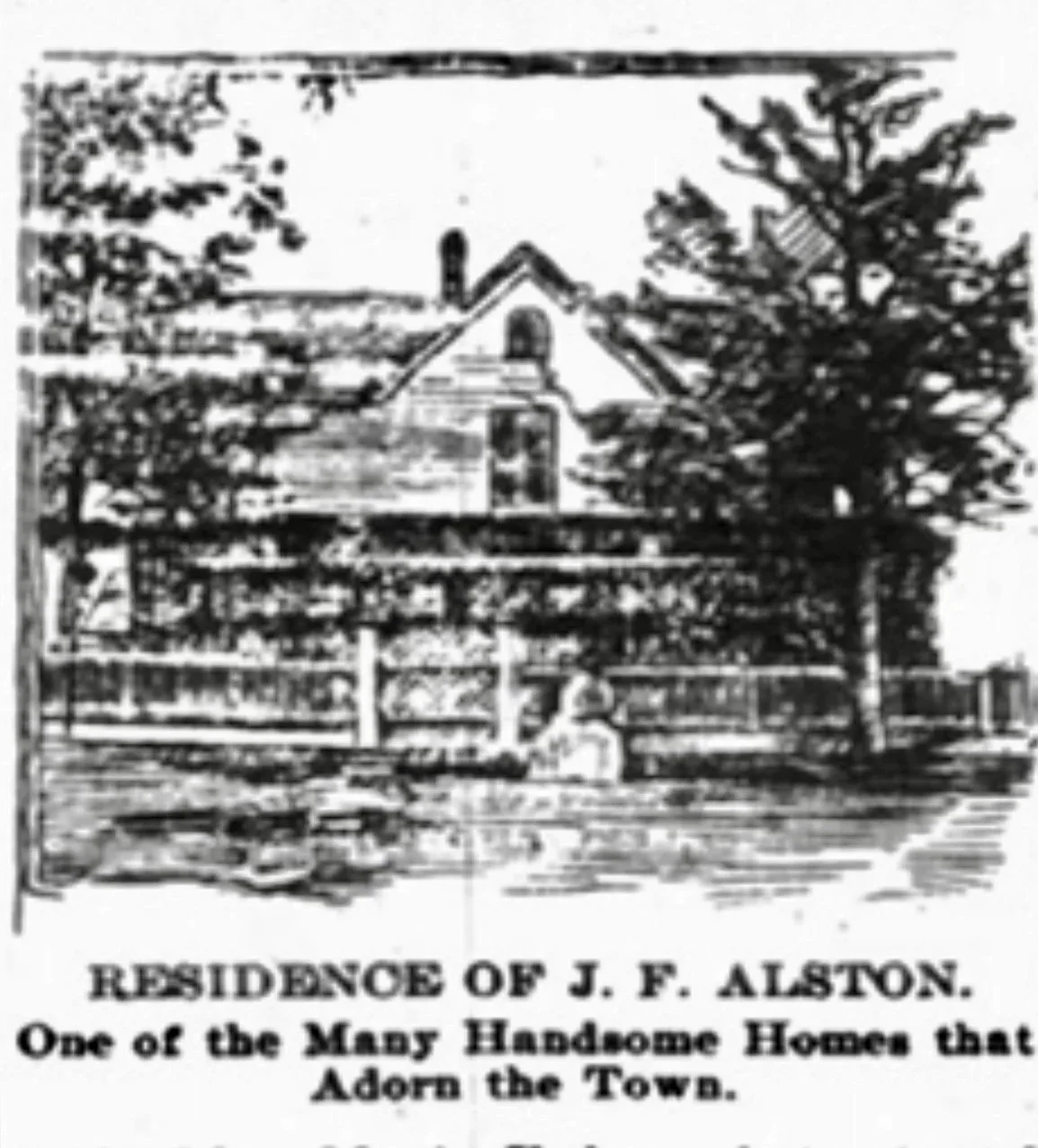
The Captain J. F. Alston house in the Raleigh News & Observer August 29, 1897
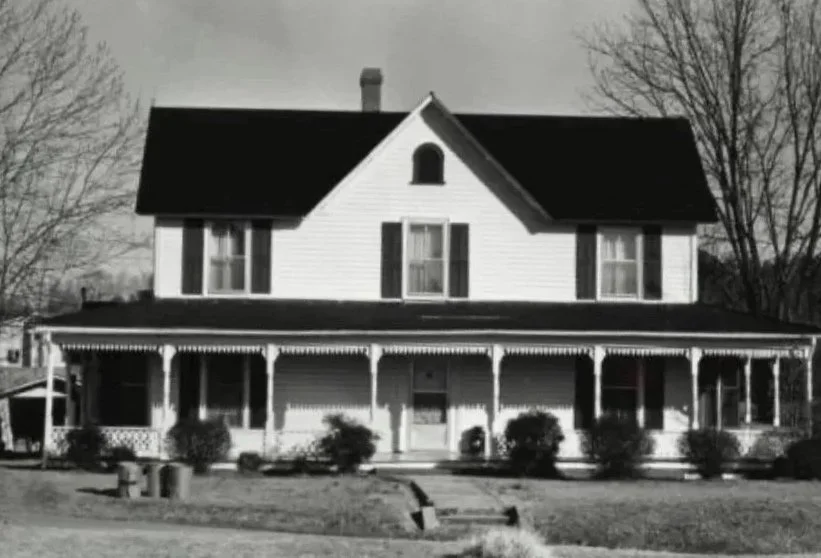
Photograph of the Captain J. F. Alston house taken in the mid 80’s
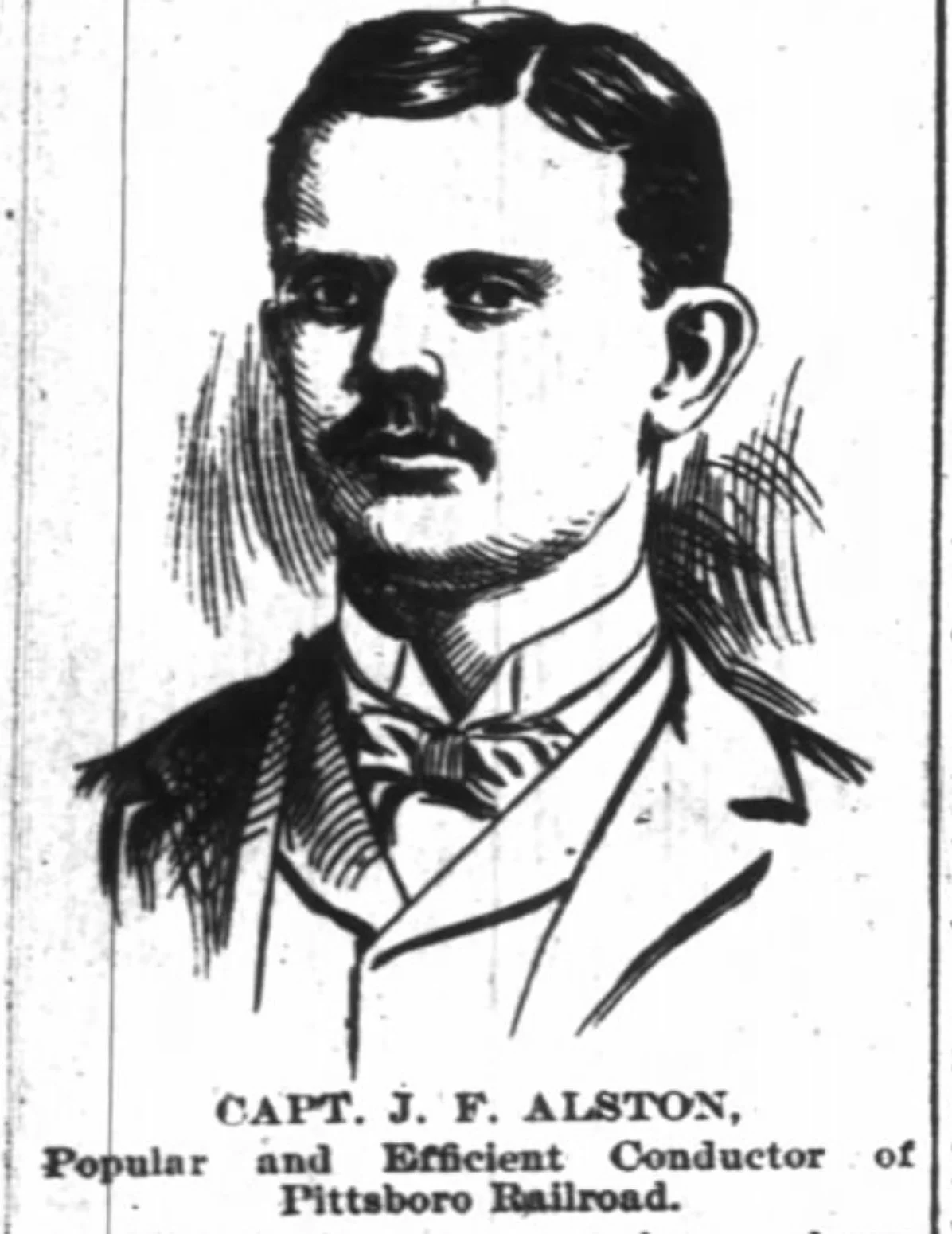
Captain James F. Alston
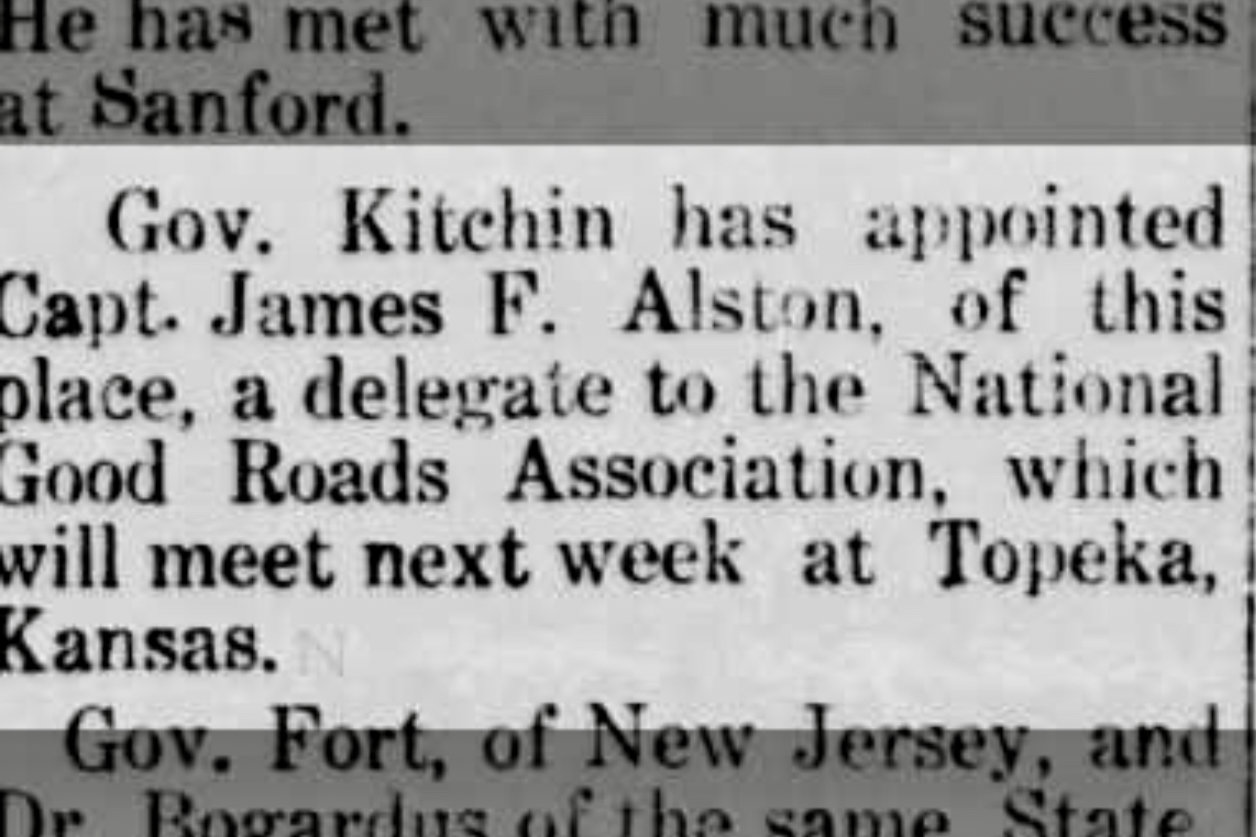
Captain James F. Alston was Pittsboro’s “long time and faithful engineer on the Montcure-Pittsboro train” and served the community for 38 years as a locomotive pioneer. He was also appointed by Governor Kitchens as a “Good Roads Delegate” for the state of North Carolina and utilized his expertise in railroad and as one of the first car owners in Pittsboro to later help pave the way for how our national and statewide transporation would be formed.
-
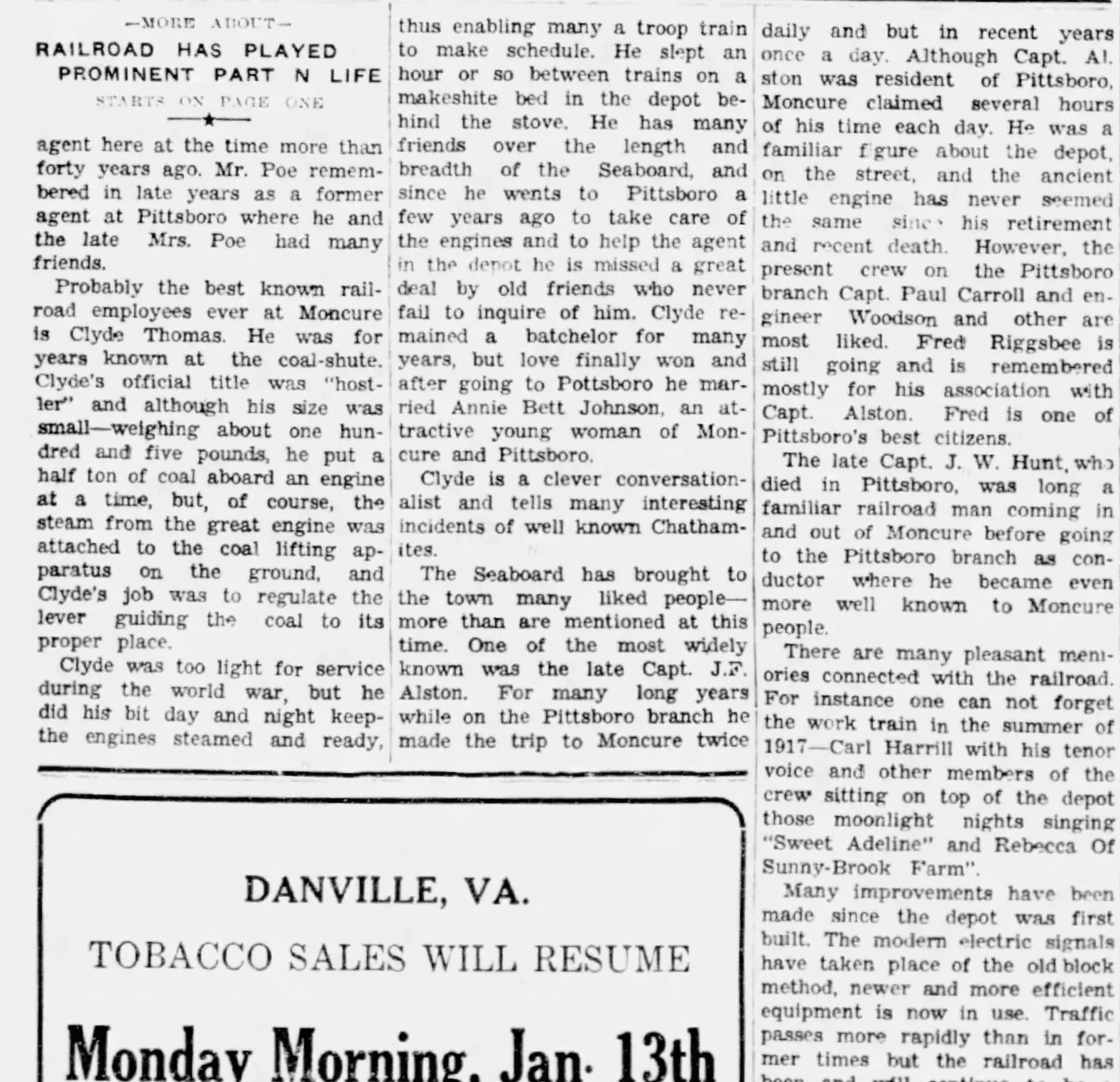
Captain Alston (1860-1935) was a prominent railroad conductor, engineer, and civic leader whose life and home are deeply entwined with the history of the Town of Pittsboro. Captain Alston worked for the Seaboard Air Line for 46 years and was well known throughout Pittsboro and Montcure.
Living for decades in this distinguished Victorian home with his wife, Octavia E. Daub, Capt. Alston and his wife “Ockie”played an instrumental role in shaping the town’s community and culture.
-
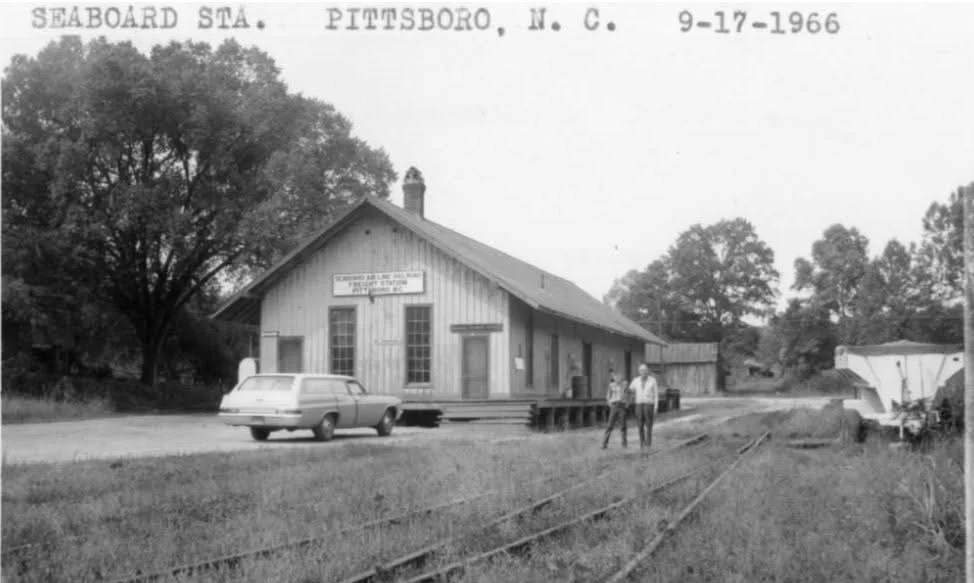
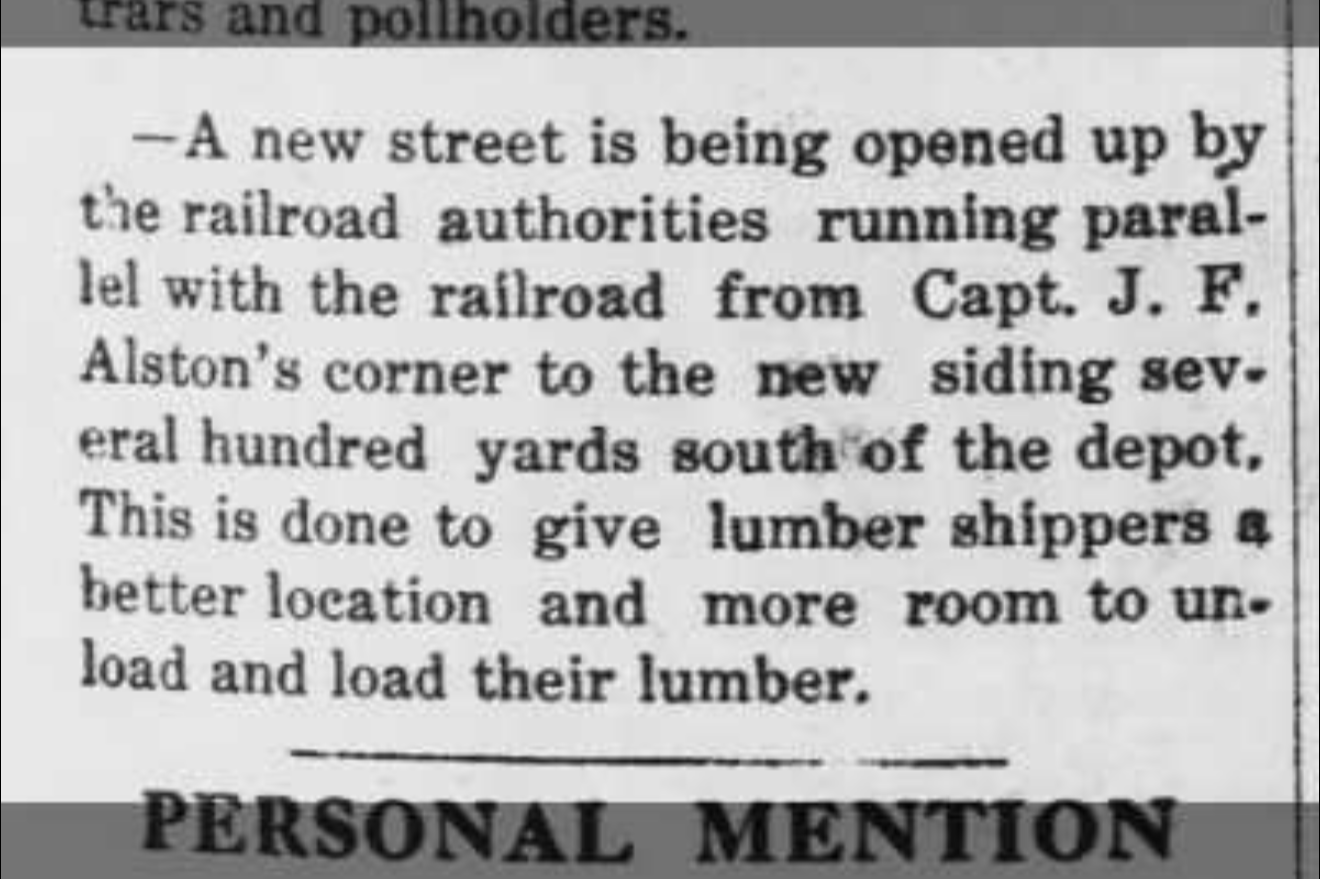
The Captain’s house once stood right beside the Pittsboro rail station-a vital stop on the line from Pittsboro to Montcure. The railroad was the lifeline that brought commerce, visitors, and opportunity to Pittsboro, putting the town on the map and helping it flourish in the late 19th and early 20th centuries.
Hundreds of Newspaper Articles Captain Alston’s leadership, generosity, and commitment made him a key figure in the story of Pittsboro’s rise, and many artifacts, including hundreds of news articles about his daily activities, celebrate his impact and the significance of both is home and the railroad to the town’s enduring legacy.
-
As one of the first owner’s of the first automobiles in Pittsboro, Captain Alston helped to pave the roads of transportation in the state of North Carolina. His expertise in transportation was likely a reason Governor Kitchens, whose early efforts started North Carolina’s “Good Roads State” breakthrough, appointed Captain J. F. Alston as a delegate of the “Good Roads” convention.
-
Captain J. F. Alston and his wife, “Ockie” Octavia Alston, were known throughout the Pittsboro community for their spirit of giving and connection.
Historical articles tell of stories of Captain Alston contributing to the town by taking teachers on their first car ride in one of the town’s first automobiles, donating to veterans and minority schools, and for his personable and well-like character while welcoming train passengers on his twice a day trips from Pittsboro to Montcure. He also served a number of roles in town government to help pave the way for what Pittsboro is today.
-
The Alstons wanted a memorial window after the loss of their only child. They had their lifelong friend, Frank London, design a stained glass window at the Pittsboro United Methodist Church. The window called “Jesus Healing Child,” was installed between 1914 and 1920. It depicts a mother on her bended knee, offering her sick child to Christ. It can still be found in the church today.
-
In addition to our namesake, we have created a number of Easter egg moments within Gandy Coffee House to pay tribute to the railroad history, our historic home, and the numerous newspaper articles we found about Captain J.F. Alston and his wife, Octavia.
Pittsboro’s Gilded Age
Pittsboro was once considered to be a choice for North Carolina’s state capital. As you explore the town, you will see hints into of Pittboro (formerly Pittsborough) and the main characters of its Victorian era. These names are still connected to the town and can be found at local parks and historic buildings. They are also connect to our Gandy Coffee House.
-
Historical records suggest the home was built by Bennett Nooe, another prominent figure at the time. Nooe owned a lumber mill and built many of Pittsboro’s, historic homes that still stand today within the historic district. constructed the home’s distinctive Queen Anne style of architecture, including its iconic front porch. Bennett Nooe owned a lumber planing mill and was a prominent builder, and many of the beautiful homes he built still stand today. According to historic records the home was possibly built around 1886.
-
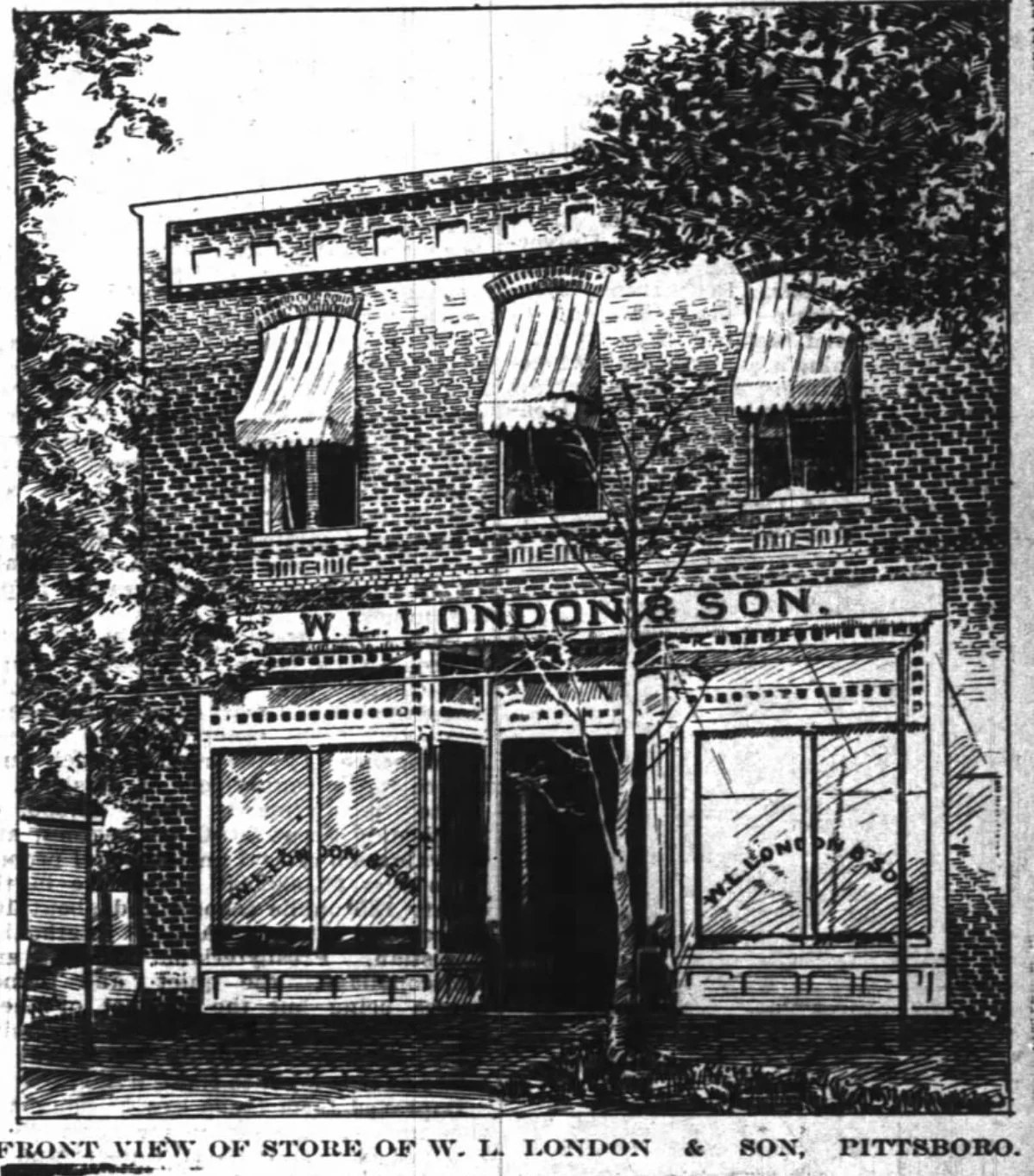
The deed records from the Chatham Historial Society shows the home may have been built in 1886 by W. L London. London was one of Pittsboro’s most prominent merchants and local leaders at the time. According to historical records W. L London and his son, Henry London, were close friends Captain J. F. Alston. They served together in civil positions and attending many functions together. Captain Alston purchased this Victorian home from W. L. London in 1892.
A Queen Anne Victorian
The Captain J. F. Alston was built in the Queen Anne Victorian style, and was once a landmark in the town of Pittsboro.
-
At the time, it was common practice to physically relocate entire houses rather than rebuild them. Nails were made by hand, and homes were built entirely of wood. These resources were costly and took time to acquire. Every piece of lumber was hand (and later steam powered) milled wood, so tearing down a home was not practical. For that reason entire structures were often moved across town, repurposed, or pushed together to create larger, more impressive residences.
During our reconstruction of the home we have found original exterior walls and rooflines inside of the home, suggesting that there are two, and possibly three homes that were pushed together to make the current home we see today. Our renovations and the assistance of experienced home historians and builders are uncovering the many clues that tell us about the home, its dating, and a glimpse into life in the gilded age of Pittsboro.
The Captain Alston home stands as a unique example of architectural history and a patchwork of local stories, craftsmanship, and heritage.
-
The Captain J.F. Alston House was once a major landmark in the town of Pittsboro. It stood at the edge of town, and once directly faced the courthouse on what is now Highway 64. Visitors to the town of Pittsboro would step off the train, which was originally situated next to the Captain J.F. Alston house, and walk down the main road to the town center.
As a result of the home being moved to create the new Highway 64 in the 1940’s, the original front of the Captain J. F. Alston house still sits facing in the direction of the courthouse . However, it is now located south of its original location onto what is now Small Street. What is now visible from Highway 64 (East Street) is the homes side profile.
-
As the railroad began to transform the Victorian era, Captain J. F. Alston and his home became prominent figures in the town of Pittsboro. He was known to all in the towns of Pittsboro and Montcure, and his home was a landmark on the edge of Pittsboro where the train entered the town.
As the town began paving roads, the Captain Alston house was referenced in numerous newspaper articles as a being a town landmark for readers. It was also referred to as “One of the many handsome homes that adorn the town.”
Gandy Coffee is proud to give new life to this Pittsboro landmark home and share the rich history of Pittsboro and North Carolina with all of our Gandy Coffee visitors.
Our Restoration Story
Follow our restoration journey as we are discover the secrets to this Victorian beauty.
The Gandy Coffee House is located in the historic Captain J. F. Alston House, a contributing property in Pittsboro’s National Register Historic District. The home belonged to Captain James F. Alston, the engineer of the Railroad line that once ran from Pittsboro to Moncure, standing beside the depot as a daily hub for travel and trade in town.

Our name honors the gandy dancers—the crews who laid and maintained the railroad. Their rhythm and teamwork kept the rails straight, the trains moving, and their hard work powered Pittsboro’s growth. The gandy was a tool they used to install the tracks and their strength and rhythm kept the steel rails straight and the trains running. Their songs, chants, and teamwork builds the infrastructure that carried commerce and growth to Pittsboro. Though these men are often overlooked, they were vital contributors to the story of our town.

When you visit, you will find physical pieces of this history—from original railroad maps to heavy iron spikes—quite woven into the fabric of our parlors, grounding your modern cup of coffee in the rich industrial heritage of our town. Small Street of Pittsboro, where Gandy Coffee House proudly sits.  Though the rail line was short-lived, its impact shaped the growth of the town of Pittsboro and connected the community to larger markets and ideas.